
One reason the fee can't be lower than 3 per cent is that it is difficult for an RIA to do a good job and remain viable even at 3 per cent.
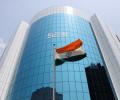
The market regulator's newly proposed selection criteria for the over Rs 400-trillion-a-day futures and options (F&O) market could pave the way for the entry of popular stocks such as Life Insurance Corporation (LIC) of India, Jio Financial Services, Zomato, Paytm, DMart, and Adani Energy into the derivatives segment. The Indian derivatives market, which accounts for most of the trading volumes, could see big churn with over two dozen exits from the current list of 182 stocks due to an upward revision in the eligibility thresholds.

India's thriving mutual fund (MF) industry is drawing interest from several firms, with multiple applications submitted to the Securities and Exchange Board of India (Sebi) for asset management company (AMC) licences.

'When interest rates rise, the NAVs of these funds will fall.' However, they won't fall as much as longer-duration funds.

The government said on Thursday said it will make it clear within 10 days whether foreign players be allowed to hold stake in stock exchanges or not.

'Investors with foreign currency-denominated goals, such as foreign education or foreign travel, should go for US equity funds.'

The greater the post-listing gains, the higher the number of investors looking to sell.

Markets regulator Securities and Exchange Board of India (Sebi) is stepping up efforts to ease the onboarding of foreign portfolio investors (FPIs) and has constituted a cell for consultations with offshore investors and custodians, said whole-time member Ananth Narayan. Sebi is also working to make regulations more "light-touch" for FPIs that invest exclusively in government securities or are sovereign funds. The regulator is trying to make the registration process easier for such FPIs, the Sebi official said at the CII Financing 3.0 Summit in Mumbai.

Ola Electric, the SoftBank-backed electric vehicle (EV) maker, is likely to pursue a valuation of approximately $4.5 billion in its upcoming initial public offering (IPO), marking about 18 per cent decrease from its last funding round valuation of around $5.5 billion, according to industry sources. The Bhavish Aggarwal-founded firm aims to file for the IPO by next month, according to people familiar with the matter. "The strategy is to price the IPO attractively for investors, fostering long-term growth and wealth creation," said a source.

F&O trading is a zero-sum game where one person's loss is another's gain. Only one per cent of traders gained the money lost by 93 per cent, warns Harsh Roongta.

Engineering and construction major Larsen & Toubro (L&T) reported a 25 per cent rise in net profit attributable to the owners of the company for the January-March quarter of 2024-25, owing to higher revenues and an exceptional gain. For the quarter under review, L&T posted a consolidated net profit of Rs 5,497.3 crore, while revenue rose 10.9 per cent year-on-year (Y-o-Y) to Rs 74,392.28 crore.

For food aggregator platform Swiggy, quick commerce (qcom) is proving to be a better growth opportunity than food delivery. Its qcom arm Instamart is rapidly outpacing its core food delivery vertical across several key financial metrics, the company's recently filed draft red herring prospectus (DRHP) shows.

Midcap stocks Hero MotoCorp, Zydus Lifesciences, JSW Energy, NHPC, Bharat Heavy Electricals, Bosch, and Samvardhana Motherson are expected to earn upgrades.

Commissions paid to mutual fund distributors (MFDs) increased by over 20 per cent for most large fund houses in 2023-24 (FY24), driven by a sharp market rally and strong inflows. The largest fund house, SBI Mutual Fund (MF), which now manages nearly Rs 10 trillion in assets, paid Rs 2,025 crore to its major distributors - 21 per cent higher than the Rs 1,675 crore payout in 2022-23 (FY23).

New investors should gradually build a 5 to 10 per cent allocation to gold.

Leading brokers are expected to increase brokerage rates in the coming weeks, as they navigate a series of regulatory changes that are expected to squeeze profitability. According to industry sources, top brokers may soon begin charging for equity trades and raise the flat fees for intra-day and derivatives trading by 10-30 per cent. Several smaller players have already hiked their brokerage charges, signalling a potential end to the zero-brokerage era that has drawn millions of new investors into the stock market and fuelled active trading.

The ban on listing and other roadblocks on ownership have tainted the Jalan Committee report.

Over 70 per cent of individual investors who engage in intraday trading incurred an average loss of Rs 5,371 during 2022-23 (FY23), according to a study conducted by the Securities and Exchange Board of India (Sebi). Intraday trades involve buying and selling securities within the same trading day. The study covered nearly 7 million investors trading in the equity cash segment.

Regulator proposes mutual fund model for infrastructure debt funds.

'Investors with a long-term investment horizon and the risk appetite for fluctuations in property values may find SM Reits a viable option.'
The Bombay Stock Exchange is set to see a reshuffle in its board of directors, the first since the country's oldest bourse was demutualised and became a limited company last year. The reshuffle, details of which are yet to be discussed, is widely believed to be at the behest of market regulator Securities and Exchange Board of India.

Fifteen companies have launched their initial public offerings (IPOs) in December 2024, making it the best month for public offerings since 1996. Collectively, they have raised Rs 25,425 crore, which also made December the best month in terms of the quantum of funds raised. In December 1996, 33 companies had raised Rs 931 crore.

The exchanges have also been asked to post all such orders since April 1, 2007, on their websites within 30 days.

Disclosing an individual's income-tax returns is tantamount to violating the person's fundamental right to privacy as recognised by the Constitution.

In a bid to ease compliance towards companies planning public offers (IPOs), the Securities and Exchange Board of India (Sebi) has notified norms that open more avenues to meet the minimum promoters' contribution (MPC). The market regulator has permitted promoter group entities and non-individual shareholders to contribute to the mandated promoters' contribution in the case of a shortfall without being identified as a promoter.

At its meeting held on Friday, the company's board rejected the minority shareholders' demand and termed the requisition as "invalid and illegal". "In its meeting held on 1st October 2021, the board has arrived at a conclusion that the requisition is invalid and illegal; and has accordingly conveyed its inability to convene the Extraordinary General Meeting to Invesco Developing Markets Funds and OFI Global China Fund, LLC," ZEEL said in a statement.

'Allocate up to 20 per cent of your core equity portfolio to quality funds.'

An analysis by the Securities and Exchange Board of India (Sebi) has revealed that retail traders remain at the wrong end of the stick when it comes to equity derivatives trading. About 93 per cent of them incurred an average loss of Rs 2 lakh (per trader) during the last three financial years. The new report highlights an increase in the loss-making individual investors in futures and options (F&O) to 91.1 per cent in FY24 compared to 89 per cent in FY22.

IPOs inherently carry more risks than stocks that have been listed on the exchanges for some time.

Electric two-wheeler (e2W) maker Ather Energy has submitted preliminary papers to the Securities and Exchange Board of India to raise funds through an initial public offering (IPO). According to the draft red herring prospectus (DRHP), the IPO will comprise a fresh issue of equity shares valued at Rs 3,100 crore, alongside an offer for sale of 22 million equity shares by its promoters and investor shareholders.

With Rs 17,087 crore raised so far this calendar year, the total is already 2.4 times that of the full year of 2023, which stood at Rs 7,266 crore.

In an interview with Business Standard, Jalan, who has also been a member of the Rajya Sabha, speaks on a wide range of issues concerning the markets

Shares of Zee Entertainment Enterprises Ltd (ZEEL) tumbled 12 per cent in the mid-session trade on Wednesday amid reports of capital market regulator Sebi has unearthed a financial discrepancy exceeding USD 241 million (nearly Rs 2,000 crore) in the accounts of the company. The stock of the company nosedived 11.58 per cent to Rs 170.65 apiece on the BSE. ZEEL shares plunged 11.39 per cent to Rs 170.70 per piece on the NSE.

'There is no irrational exuberance when it comes to mainboard IPOs.' 'Most issues are by good quality businesses.'

World No. 4 Indian Arjun Erigaisi beat compatriot Vidit Gujrathi after five hours of end-to-end action in the opening round of the Chennai Chess Grand Masters 2024 in Chennai on Monday.

Bajaj Housing Finance Ltd's impressive stock market debut has brought cheer to the 100-year-old Bajaj Group, but the conglomerate faces the prospect of Bajaj Finserv being removed from the benchmark Sensex index. According to market expectations, Trent, a Tata group-owned fashion retailer, is likely to replace Bajaj Finserv during the upcoming index rebalancing in December.

'Subject to any worldwide economic collapse.'

The Adani group, buoyed by a sharp recovery in its share prices over the past year, is set to embark on a series of roadshows this week to raise up to $4 billion (approximately Rs 33,254 crore) through equity and refinancing of older debt, according to banking sources. The roadshows, scheduled to take place in major cities, will inform investors about the group's investment plans across renewable energy, petrochemicals, and infrastructure development.
As much as half the turnover of all stock exchanges in India is accounted for by only 25 broking firms. Ninety per cent of the turnover of all stock exchanges in the country is out of only five cities. These are hardly healthy signs of India's financial markets.
 © 2026 Rediff.com - Advertise with us - Disclaimer - Privacy Policy - Sitemap - Feedback - About us - Terms of use - Grievances